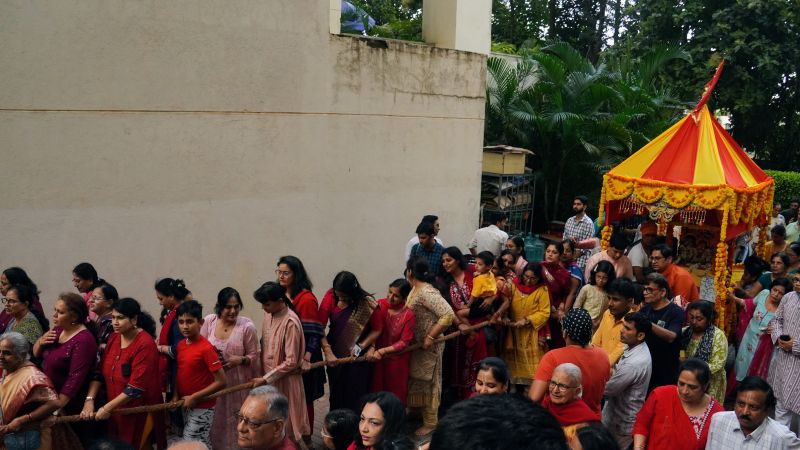
365 Days of Stories – Day 51: No One Led. Everyone Owned.
About 20 days ago, my wife returned from her hometown with a question:
“Why don’t we celebrate Jagannath Rath Yatra in our society? We celebrate everything else—Durga Puja, Ganesh Chaturthi, Onam… but not Jagannath Rath Yatra, which is so deeply rooted in Odisha and is one of the four dhams of India.”
I casually said, “If you can pull that off in one week, that would be outstanding.” I didn’t think much of it. But she meant every word.
What followed was a masterclass—not just in event organization—but in leadership, collaboration, and execution.
She started with nothing. No team. No plan. She just began calling every Odia family in the society. Eventually, 7–9 people came forward to support the idea.
That very evening, the first meeting happened. From Day 2 onward, not everyone showed up consistently. But someone always did. The work began.
One by one, problems came—and were solved:
Permission from the association? Taken.
Approval from senior citizens for using the temple area? Negotiated and resolved.
Where do we get a Rath (chariot) on rent? After much searching and calling, they found a temple willing to help.
Who will be the Pandit? Sorted.
How to create a spiritual vibe? She approached the Hare Krishna group who sang every weekend nearby. They said yes to perform on the Rath Yatra day.
Decoration, coordination, rituals, logistics — solved, together.
In just 10–15 days, what seemed almost laughably impossible, actually happened.
But here’s the most remarkable part.
Every time I asked her, “Who’s leading all this? Are you driving everything?” She smiled and said,
“I’m only doing what I can. Others are doing their part. No one’s leading. Everyone is owning.”
There was no formal leader. No hierarchy. No one delegated tasks. No one chased follow-ups. Everyone simply took responsibility for what they could do—and followed through.
No egos. No blame games. Just joint ownership.
And it made me wonder—
In the corporate world, we obsess over “who’s leading the team.” We define a leader. Give them the title. Hold them accountable for delivery.
But maybe, just maybe—the best teams don’t need a leader to follow. They only need a mission to own.
That day, I saw leadership in its purest form—distributed, quiet, shared.
My wife didn’t call herself a leader. But to me, she led by letting others lead.
And I think that’s the future of leadership—not managing people, but enabling ownership.
The best leadership is invisible. The best teams don’t follow one person—they follow one purpose.